2 3 4 5 Ballet Webb

Wednesday, May 16, 2018

Wild Wednesday Sissonne Variations


Wild Wednesday Sissonne Variations

A student asked me recently about what a sissonne with a développé is called. I have always heard it called sissonne retombé, or sissonne doubles but it is also, not surprisingly, called sissonne développé assemblé.

The confusion is probably due to the fact that this is a compound step, or one made of a combination of other steps, like développé and assemblé.

This step is most commonly seen near the end of the male variation from Peasant Pas de Deux from the ballet Giselle (see Link of the Day).

From the Big Blue Book of Ballet Secrets
Secret #15ooo:
“A sissonnes doubles or sissonne retombé is a variation on a sissonne.

Link of the Day:

Quote of the Day:
“We are not creators; only combiners of the created. Invention isn't about new ingredients, but new recipes. And innovations taste the best.”
― Ryan Lilly

                Help expand the knowledge base!
 Leave a comment about any instructions, ideas, or images that worked best for you!

My latest books are coloring books! They are available on Amazon.

Want to know more about me? Read my interview at Ballet Connections:

Or "Like" me on my Facebook Author Page:

Or visit my Pinterest page:

For interesting articles involving mental health:


Tuesday, May 15, 2018

Technical Tuesday Mouse


Technical Tuesday Mouse

According to an article in National Geographic Kids, the word “muscle” comes from the Latin term musculus meaning “little mouse”. The Romans thought the biceps, when flexing, resembled a mouse moving under a rug. Or, it may simply be that the muscle itself looked like a small mouse. This analogy was also made in Greek: the word mys means both muscle and mouse.

This made me wonder where the word “mystery” came from, since it seemed like a logical progression from mys. But no. Mystery comes from from Anglo-French misterie, and Old French mistere "secret, mystery, hidden meaning". So sometimes things aren’t always what they seem.

But now it’s no mystery where the word “muscle” comes from.

From the Big Blue Book of Ballet Secrets
Secret #27fff:
“The word muscle means little mouse.”

Link of the Day:

Quote of the Day:
“When the mouse laughs at the cat, there's a hole nearby.”
― Nigerian Proverb

                Help expand the knowledge base!
 Leave a comment about any instructions, ideas, or images that worked best for you!

My latest books are coloring books! They are available on Amazon.

Want to know more about me? Read my interview at Ballet Connections:

Or "Like" me on my Facebook Author Page:

Or visit my Pinterest page:

For interesting articles involving mental health:


Monday, May 14, 2018

Mad Monday Fly


Mad Monday Fly

A step that is often seen in Bournonville technique is the brisé volé. Translated, this means “flying brisé” and that describes the step pretty well. It involves not only the standard brisé to the front, but a brisé back as well. It can be challenging, to say the least.

So, you may ask, what does “brisé” mean? It means broken or breaking. So brisé volé means broken flight or maybe even a flying broken thing. Hmmmmm….

Brisé volé is most famously seen in the coda of the Blue Bird Pas de Deux from Sleeping Beauty. The male dancer does a series of brisé volés traveling across the stage (see today’s Link of the Day). Needless to say, I don’t think he looks like a flying broken thing….

From the Big Blue Book of Ballet Secrets
Secret #15mmm:
”Brisé volé means broken flight.”

Link of the Day:

Quote of the Day:
“The moment you doubt whether you can fly, you cease for ever to be able to do it.”
― J.M. BarriePeter Pan

                Help expand the knowledge base!
 Leave a comment about any instructions, ideas, or images that worked best for you!

My latest books are coloring books! They are available on Amazon.

Want to know more about me? Read my interview at Ballet Connections:

Or "Like" me on my Facebook Author Page:

Or visit my Pinterest page:

For interesting articles involving mental health:


Sunday, May 13, 2018

Sunday Redirect


Sunday Redirect

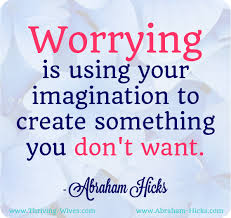
Nothing kills progress faster than worry and negativity. Right? We’ve all been there. But what can we do about it? Our minds seem to act like runaway horses carrying us  unwilling down the path of negative thoughts. Scary.

Here are three basic ways to fight this problem:
1.     Recognize negative thoughts when they occur
2.     Live in the moment
3.     Practice constructive thinking.

Recognizing negative thoughts is pretty easy, but getting rid of them is the key. Living in the moment is the secret. Most negativity involves two things – worrying about the past or the future, (or both). Really scary! The more you focus on the here and now, the easier it is to let go of those thoughts that rob you of your joy.

Once you recognize your negative thoughts and practice (there’s that word again!) living in the present, you can add constructive thinking. This is what puts your problems in perspective – will it matter in five years? Ten? Is there some action you can do right now to solve the problem? If not, throw the thoughts away and focus on something else. And, if all else fails, watch some funny cat videos.

Reversing negativity isn’t easy. It’s a lifetime quest. Hmmmm. Kind of like dance training!


From the Big Blue Book of Ballet Secrets
Motivational Secret #133:
“Redirect negative thoughts.”


Quote of the Day:
“Let us not look back in anger or forward in fear, but around in awareness.”
 —James Thurber

                Help expand the knowledge base!
 Leave a comment about any instructions, ideas, or images that worked best for you!

My latest books are coloring books! They are available on Amazon.

Want to know more about me? Read my interview at Ballet Connections:

Or "Like" me on my Facebook Author Page:

Or visit my Pinterest page:

For interesting articles involving mental health:


Saturday, May 12, 2018

Saturday Pointed Statute


Saturday Pointed Statute

Ahhhh… those lovely pointe shoes. Students spend the first years of their dance training begging to get them, and the rest of their training relieved to take them off after a hard day. Sigh.

One of the most difficult things to do in pointe shoes seems like the simplest: point the feet. However, those pesky shoes are hard and it takes a great deal of training and strength to be able to point (I prefer to say stretch) the feet the same way one does in flexible ballet shoes.

But they are called pointe shoes, after all, so we must strive to have them live up to their name. No biscuit (un-pointed) feet, please.

From the Big Blue Book of Ballet Secrets
Ballet Statute #123:
“Strive to make pointe shoes live up to their name.”

Link of the Day:

Quote of the Day:
“Life always begins with one step outside of your comfort zone.”
― Shannon L. Alder

                Help expand the knowledge base!
 Leave a comment about any instructions, ideas, or images that worked best for you!

My latest books are coloring books! They are available on Amazon.

Want to know more about me? Read my interview at Ballet Connections:

Or "Like" me on my Facebook Author Page:

Or visit my Pinterest page:

For interesting articles involving mental health:


Friday, May 11, 2018

Fun Friday Facts: Tutus


Fun Friday Facts: Tutus

On this fun Friday I thought I’d talk about tutus. The symbol of ballet, tutus are divided into two basic categories: the Romantic and the Classical. The Romantic tutu is the long one, and comes from the Romantic era. The Classical tutu is the short one, and can be further described as pancake, platter, tabletop etc.

Tutus are labor intensive! The average tutu requires 50-90 hours of labor to make, and more if extensive beading or other decoration is involved. And that is assuming the seamstress is an accomplished one, with experience in making these unique items. A single, simple tutu requires a minimum of 10 meters (approximately 32 feet or 10 yards) of netting and/or tulle, all of which must be gathered evenly and applied in layers to the base fabric.

So what would you expect to pay for a single, professionally-made tutu? The costs vary, but $3000 is about the minimum. Not surprising when you consider that each one is a work of art in itself!


From the Big Blue Book of Ballet Secrets
Costuming Secret #29:a
“The average tutu requires 50-90 hours of labor to make.”

Link of the Day:

Quote of the Day:
“You have to love dancing to stick to it. It gives you nothing back, no manuscripts to store away, no paintings to show on walls and maybe hang in museums, no poems to be printed and sold, nothing but that single fleeting moment when you feel alive.”
― Merce Cunningham

                Help expand the knowledge base!
 Leave a comment about any instructions, ideas, or images that worked best for you!

My latest books are coloring books! They are available on Amazon.

Want to know more about me? Read my interview at Ballet Connections:

Or "Like" me on my Facebook Author Page:

Or visit my Pinterest page:

For interesting articles involving mental health:


Wednesday, May 9, 2018

Wondrous Wednesday Èpaulement


Wondrous Wednesday Èpaulement

Dancers are sometimes described as having a beautiful èpaulement. This generally means they look beautiful when they move, especially in the upper body and the movement of the arms. But what does the word itself mean?

Èpaulement is a French term (not surprising) that means “shouldering” . It does not mean, as some may assume, simply the movement of the arms or port de bras. But this confusion is understandable since the arm movements figure prominently in the total movements that involve the angles of the shoulder as well as the head and neck.

Èpaulement, in my opinion, also involves the intangible. There is an artistic, expressive quality that many dancers have in their èpaulement that takes it beyond the ordinary.

 I’m sure you know what I mean.


From the Big Blue Book of Ballet Secrets
Secret #21jj:
“The word ‘èpaulement’ means ‘shouldering’.

Link of the Day:


Quote of the Day:
“The difference between ordinary and extraordinary is that little extra.”
― Jimmy Johnson

                Help expand the knowledge base!
 Leave a comment about any instructions, ideas, or images that worked best for you!

My latest books are coloring books! They are available on Amazon.

Want to know more about me? Read my interview at Ballet Connections:

Or "Like" me on my Facebook Author Page:

Or visit my Pinterest page:

For interesting articles involving mental health: